
I used to think a website was something you earned after you had a real business. That was backwards. The internet does not care whether you feel ready. The minute someone hears your name, they search you. The minute they find nothing, they make a guess about you. And in business, guesses cost money.
That is why I keep telling people the same thing: if you want credibility, you need a website. If you want to be found, you need a website. If you want to own your future instead of renting it from a platform, you need a website. I say this even if you are between jobs, between businesses, or just trying to figure out what comes next.
Social media is useful, but it is not a foundation. I wrote about that in what marketers should do because of the Facebooks FTC lawsuit over Instagram and WhatsApp. Platforms change the rules whenever they want. Accounts get disabled. Reach drops. Algorithms shift. A website is the one place online where you can still control the message, the proof, and the next step.
Why a website matters before you think you are ready
People do not just visit websites. They use them to decide whether to trust you. A website answers the questions every prospect is asking silently: Who are you? What do you do? Can you help me? Why should I believe you? How do I contact you? If your online presence cannot answer those questions in one stop, you create friction. Friction kills action.
This is where a lot of people get stuck. They think a website has to be a big, fancy, custom-built masterpiece before it can matter. It does not. It just has to make it easier for someone to understand what you do. That is why simple messaging is such a huge deal. I break that down in how simplified messaging converts more clients. Clear beats clever. Specific beats vague. A website that says one thing clearly will always outperform a pretty site that says nothing.
Here is the other thing: a website is not about looking important. It is about being legible. If someone lands on your page and immediately understands what you help with, they feel safe moving forward. If they have to decode your message, they leave. That is why I tell people to stop obsessing over colors, fonts, and perfect branding and start with the words. The words do the selling.
Even if you do not have a business yet, you still have a future to protect
Some people tell me, “Jeremiah, I do not need a website because I am not really in business yet.” I disagree. That is exactly when you need one most. If you are transitioning, experimenting, freelancing, consulting, coaching, or simply rebuilding after a hard season, a website gives you something stable. It tells the world you exist. It gives people a place to land when they hear your name. It gives you a home base before your offer is fully formed.
I have watched this over and over. Someone starts with nothing more than a name, a point of view, and a willingness to help. They put up a simple site, add a contact form, and begin collecting emails. Then they use that site as a bridge. It is not “the final version.” It is the first useful version. That is enough. The people who wait until everything is perfect lose months, sometimes years, because they treat launch like a graduation instead of a starting line. That is why I keep saying: stop overthinking and start moving. I wrote about that in stop overthinking and start taking imperfect action.
If money is tight, that does not change the answer. It just changes the plan. Start small. Buy the domain. Use a simple builder. Make one page good instead of twelve pages mediocre. I go deeper on that mindset in building your business on limited funds. A website is not a luxury item. It is a practical asset you can build cheaply and improve over time.
Your website is where ownership starts
When I talk about ownership, I am not trying to sound dramatic. I am talking about a business principle. Your followers are not the same thing as your audience. Your audience is the group of people you can actually reach when you need to. A website helps turn borrowed attention into owned attention. A blog post, a contact form, and an email opt-in can keep working long after a social post dies.
That is why I keep pushing email lists so hard. I wrote about it in why your email list is the key to long-term business success. A website is where the email list starts. It is where you move someone from curiosity to connection. It is where they give you permission to keep talking to them. If you only have a social profile, the platform controls the door. If you have a website, you control the door.
And once someone is on your site, you can show them the next step with clarity. You can offer a free resource, a starter class, a call, a newsletter, or a simple “book here” button. You can point them toward your strongest content, like the 3-step formula to getting more coaching clients fast. You can use your site to guide people instead of hoping they figure you out in a feed full of distractions.
What a starter website actually needs
You do not need a huge site. You need a useful site. For most people, that means a clear home page, an about page, a services or offers page, one proof page, and a contact page. That is enough to start. If you are still early, a one-page site can work too. The goal is not to impress other designers. The goal is to make it easy for the right person to understand what happens next.
On the home page, lead with one sentence that says who you help and what result you create. On the about page, tell the story behind why you do this work. On the offer page, explain what you do, what it costs, and what someone gets. On the proof page, use testimonials, case studies, or even a short list of outcomes. On the contact page, make it absurdly easy to get in touch. That simple structure is enough to move most people forward.
If you want a stronger conversion path, study how a business page works like a sales conversation. I unpack that in how to sell more of anything. And if you want to grow without wasting money, you can pair the website with a simple funnel and a low-risk first offer. The point is not to build a museum. The point is to build a path.
Your website makes your message stronger everywhere else
A website does not just help with Google. It makes every other channel work better. Your Instagram bio makes more sense when it points somewhere real. Your podcast guesting gets more effective when listeners can land on a page that says exactly what you do. Your networking becomes easier because you can say, “Here, just check my site.” The website becomes the anchor that holds everything else together.
This matters even more when you want to be found by people who are actively searching for a solution. Search traffic is not passive. It is intent. Somebody types a need into Google, and your site has a chance to answer it. That is why your site should not just exist. It should teach, clarify, and invite. If you write content that solves real problems, you create a compounding asset. That is a very different game than posting content that evaporates in twenty-four hours.
And if you are still worried about what to say, keep it simple. Start with the problem, the promise, and the next step. That is enough for version one. You can always improve the design later. You can always add pages later. But you cannot get back the time you spent hiding behind “I am not ready yet.”
If you are between businesses, your website is your bridge
This is the part people underestimate. Even if you are not actively selling right now, a website can still work for you. Put up a “coming soon” page. Add your name, your expertise, and one sentence about what you help with. Invite people to join a waitlist. Add a contact form. Add a short bio. That tiny page does more than a blank social profile ever will.
I have seen this save opportunities more than once. Someone hears about you from a friend, checks you out, and finds a clean page that makes sense. That simple act of being findable creates confidence. It also keeps you from looking like a ghost when someone goes looking for you. The internet is a credibility check, and your site is your answer. Without it, you are asking people to trust a memory, a screenshot, or a half-finished profile.
This is also where good content begins to pay off. A few useful pages can do more than a dozen random posts. If you want a model for how to use content to guide someone into action, look at a page like why taking imperfect action is better than being perfect and then ask how each section helps the reader make a decision. That is the standard. Not “Did I publish something?” but “Did I make it easier for someone to trust me?”
What I would do this week if I were starting from zero
- Buy the domain. Do it now, not later. Your name, your brand, or your best-fit offer. Do not wait for the perfect moment.
- Choose the simplest builder. Squarespace, Wix, WordPress, whatever gets you moving. The tool matters less than the fact that you published something. If you need budget guidance, start with building your business on limited funds.
- Write the homepage in plain English. Who do you help? What problem do you solve? What result do they get? Keep it direct.
- Add one lead capture. An email opt-in, a free guide, a starter class, or a contact form. Do not let the first version be a dead end.
- Publish and improve later. A live website with a rough message beats a perfect concept in your notes app. Ship the first version, then refine it with real feedback.
That is the whole point. Do not wait until you “have a business.” Build the website that helps the business become real. A website is not proof that you are fully finished. It is proof that you are serious, reachable, and building something that can last.
Ready to Grow Your Business? Join Wealthy Coach Academy — my $197/month coaching program where I help you build a business that actually works. Or start with a $4.95 starter class and see what happens.
Frequently Asked Questions
Do I need a website if I am not actively selling anything yet?
Yes. A simple website gives people a place to find you, understand you, and remember you. It also gives you a place to grow before your next offer is fully built.
What if I only use Instagram or TikTok?
Use them, but do not build your whole future on them. Platforms change too fast. A website gives you ownership, stability, and a place to send people when they want more.
How many pages should my first website have?
Start with what is useful. For most people that means a home page, an about page, an offers page, a proof page, and a contact page. You can add more later.
What should I put on the first version of my site?
Say who you help, what problem you solve, what result you create, and how someone can take the next step. Keep it simple and clear.
How much should I spend on my first website?
As little as you can while still getting something live. Buy the domain, use a basic builder, and improve it over time. A useful site is more important than an expensive one.
Related Posts:
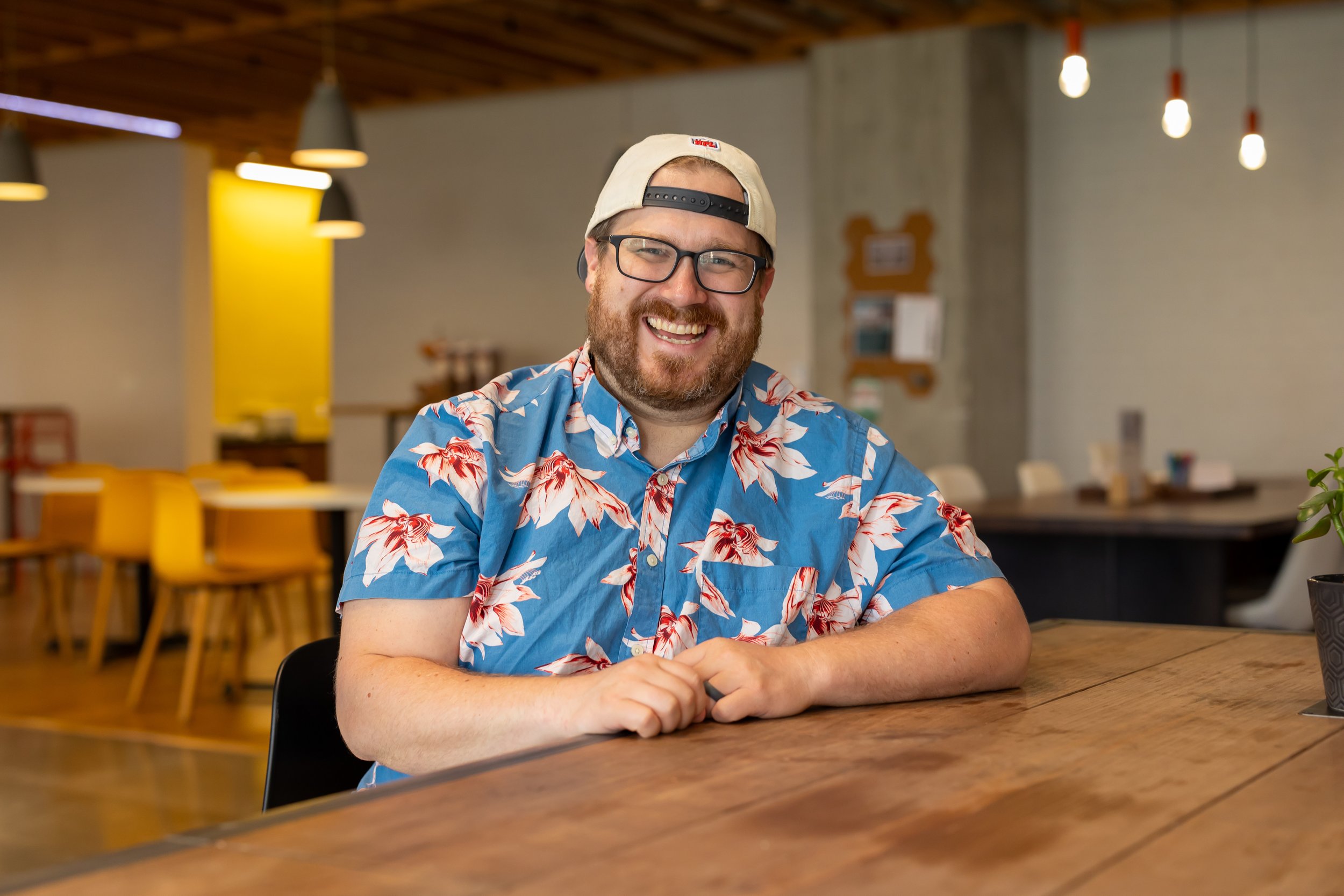
About Jeremiah Krakowski
Jeremiah Krakowski is a coaching business mentor who helps coaches, course creators, and consultants scale from $3k/mo to $40k+/mo using direct response marketing, AI systems, and proven frameworks. He runs Wealthy Coach Academy and has 23+ years of experience in digital marketing. Learn more →